| | Introduction | Advantages and limitations of farm storage | Summary |
.
Introduction
Storing grain on the farm can be used as a marketing strategy to give producers the ability to seek greater profits. After grain is harvested from the fields it must be either be stored or sold to a merchant that is accepting immediate delivery. Even if a merchant is accepting delivery, it may not be practical to deliver the grain during harvest and thus the grain must be stored. On-farm grain storage is costly and requires careful consideration in making marketing decisions. Grain storage gives producers the opportunity to wait and see if prices will change. Producers store with the hope that prices will go up post-harvest, but there is also the chance that prices may fall and grain storage would result in a loss. Even in the case that prices remain the same, producers can incur a loss from storing, because of foregone interest received or paid, known as opportunity cost. Storage costs also need to be factored in when making the decision to store grain.
Commercial grain handling systems in western Canada simply do not have the capacity to store the entire crop at harvest. The market will often pay producers a price premium for deferred delivery, thus compensating for interest and other costs of storing the crop on farm until it is required for domestic processing or export. Prices are generally at their lowest following harvest, therefore it is wise to store your grain and sell it later in the fall or winter.
Storing commodities and selling it periodically throughout the year is a way of averaging out price risk. If a producer was to sell their entire product in one sale, they are only able to capture the price at that moment in time. If a producer periodically sells throughout the year, then that producer has exposed themselves to a larger range of prices and therefore spreads out their exposure to price fluctuations. Storing grain gives producers the ability to sell their grain throughout the year diversifying their price risk.
The financial impact of storing grain can be broken down into three areas:
- The cost of building and maintaining on-farm storage.
- The opportunity cost of receiving sales proceeds from the crop earlier and using the money to pay debt or invest.
- The ability to capture deferred delivery price premiums (expressed in either basis or flat price terms).
Table 1 is an example showing the cost of farm storage. The longer grain is held on farm, the greater the accumulated storage costs. The storage cost was calculated using the purchase price of a new bin. The storage cost will differ from individual to individual based on the type and size of bin, financing, and depreciative method. Individuals who have completely paid off the purchase of a bin would have a different storage cost, but it should not be zero. The cost of aeration, repairs or maintenance should be factored in as well as additional handling costs compared to selling direct off the combine.
Table 1. 2013-2014 Historical Yellow Pea Prices (All prices in C$/tonne)
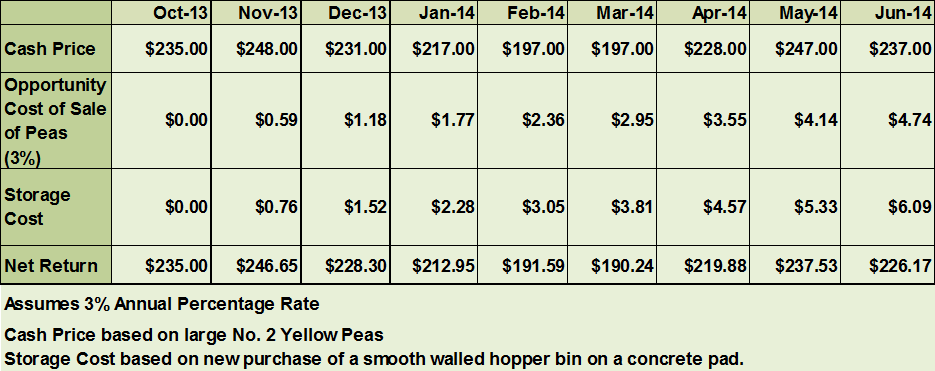
Table 1 shows:
- The opportunity cost increases as time progresses, because this is foregone investment income OR foregone debt repayment opportunity.
- Storage costs accumulate as the crop is stored. The longer the product is stored, the greater the cost incurred on each unit of commodity.
- The net return is the price realized after opportunity and storage costs are removed from the cash price.
Figure 1 uses the same prices as Table 1, but displays it as a line chart. The chart displays yellow pea cash prices from October 2013 to June 2014. The net return price is equal to the cash price less the storage and opportunity cost incurred for that point in time.
Figure 1: Monthly Storage and Opportunity Cost, Price per tonne.
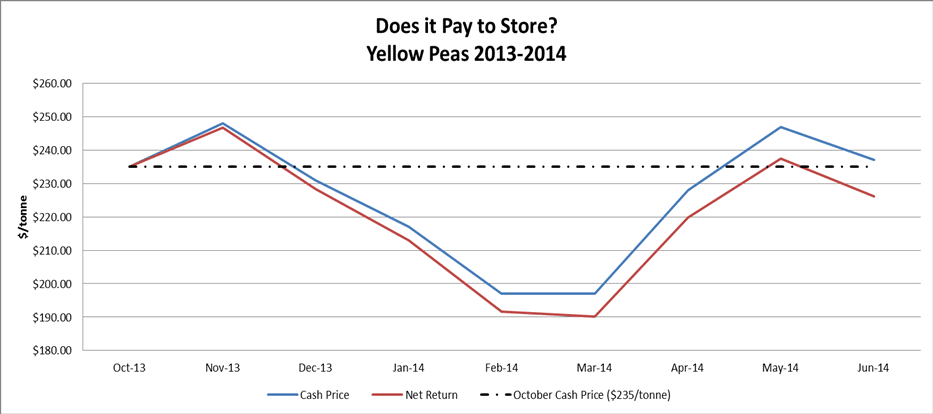
Notice that over time, the difference between the net return price and the cash price widens. This is due to storage and opportunity costs that have accumulated over the period of time that the product has been stored.
Conclusions that can be made from the table are:
- Storing and selling in November would have yielded the highest return.
- Storing and selling in January-April would have been worse than selling in October.
- Storing and selling in May would be more beneficial than selling in October. The net return price would not be as high as the cash price because of storage and opportunity costs.
How opportunity costs can vary
The cost of storing and opportunity cost of storing grain varies with each producer’s financial situation. Examples of such situations are:
- A debt free individual whose opportunity cost is a bank term deposit may have an opportunity cost of storing grain of 3 per cent (0.25 per cent per month).
- An individual with an operating loan at 6 per cent interest on (0.5 per cent per month).
- An individual with credit card or trade debt at 2 per cent interest per month. This will greatly affect the foregone interest on the sale of grain as revenues from the sale could have been used to be used to pay off debt.
Advantages and Limitations of Farm Storage
Advantages of farm storage:
- Avoids selling grain when prices are at a seasonal low (i.e., harvest).
- Helps manage income for tax purposes.
- Allows for more control over harvest operations.
- Allows for intermittent cash flow.
- Allows for staggered sales and thereby diversifying price risk.
Limitations of farm storage:
- Extra handling of grain is required.
- Increased risk of spoilage, theft, fire.
- Added cost to farm storage whether facilities are used or not.
- Difficult weather, such as excessive snow or rain, may interfere with delivery plans.
- Extended financing of inventory may require co-operation and understanding of your lender.
Summary
Storing grain gives producers an opportunity to wait and see how market prices will change. A producer’s marketing strategy is based on their need for cash and their propensity to take on risk. It is often not practical for a producer to deliver grain to market at harvest, however, when storing grain, both storage and opportunity costs need to be considered. The marginal benefit of storing the grain must be greater than the marginal cost, to be a profitable decision.
Farm storage is a marketing tool. If managed correctly, it can increase a producer’s net return. However, storing grain costs money and that must be considered when making the decision to store or not to store. |
|