Evaluating Woody Plants for Hardiness and Landscape Quality in Alberta


Subscribe to our free E-Newsletter, "RTW This Week"Sign up for our
E-Newsletter


 Cultivars evaluations | Definitions of categories in reports | Acknowledgments

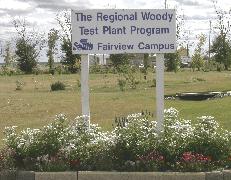
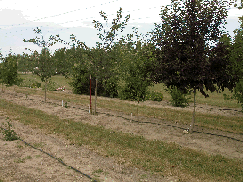
Since 1983 the Regional Woody Plant Test Project (RWPTP) has been evaluating new woody plant species and cultivars in Alberta. It is a cooperative trial between Alberta Agriculture and Food Crop Diversification Centre South (CDCS), the Landscape Alberta Nursery Trades Association Growers Group and Research Committee and five current and four past nursery cooperators. The nursery cooperators donate the space and maintain the plant material on their site.

In the RWPTP, plants are monitored for landscape quality and hardiness for six years. At the end of the evaluation period, recommendations are made about the suitability for growing in the following regions which represent much of the climatic diversity of Alberta: Fairview, Edmonton, Red Deer, Calgary, Brooks and Lethbridge areas. Plant material for the trial has generally been chosen from North American nurseries with a few selections from around the world.

The RWPTP was terminated in 2009, with the last data being collected in the fall of 2009.

Cultivar Evaluations


Abies (Fir)Cytisus (Broom)Ligustrum (Privet)Rosa (Rose)
Acer (Maple)Daphne (Daphne)Lonicera (Honeysuckle)Salix (Willow)
Aesculus (Buckeye)Diervellia (Honeysuckle)Malus (Crabapple)Sambucus (Elder)
Aronia (Chokeberry)Euonymous (Burning Bush/Euonymous)Philadelphus (Mockorange)Sorbaria (False Spirea)
Artemisia (Artemisia)Forsythia (Forsythia)Physocarpus (Ninebark)Sorbus (Mountain Ash)
Berberis (Barberry)Fraxinus (Ash)Picea (Spruce)Spiraea (Spirea)
Betula (Birch)Genista (Broom/Woadwaxen)Pinus (Pine)Symphoricarpos (Snowberry)
Caragana (Caragana)Halimodendron (Salt Tree)Populus (Poplar/Aspen)Syringa (Lilac)
Celtis (Hackberry)Hibiscus (Rose of Sharon)Potentilla (Potentilla)Taxus (Yew)
Chamaecyparis (Cypress)Hippophae (Sea Buckthorn)Prunus (Mayday/Cherry/Plum)Thuja (Cedar)
Cornus (Dogwood)Hydrangea (Hydrangea)Pyrus (Pear)Tilia (Linden/Tilia)
Cotinus (Smokebush)Juglans (Walnut/Butternut)Quercus (Oak)Ulmus (Elm)
Cotoneaster (Cotoneaster)Juniperus (Juniper)Rhododendron (Rhododendron)Viburnum (Cranberry/Ninebark)
Crateagus (Hawthorn)Larix (Larch)Ribes (Currant)Weigela (Weigela)

Definitions of Categories in Report

Recommendations
H -- Highly recommended
R -- Recommended
S -- Recommended, but needs extra care
N -- Not recommended
F -- Failed because of unfavourable soil conditions, weed competition, mechanical or animal damage.

Recommendations in lower case letters are based on less than the six growing seasons of observations or plants require extra maintenance.

Trial average
The average height of the plants after six growing seasons, unless noted. This is not necessarily the mature size of the plant.

Rating
A numerical index based on the scores recorded each year at evaluation, winter injury and landscape quality characteristics are the main criteria for rating the plants.

Annual scoring
0 -- dead
1 -- poor, low sprouts
2 -- major dieback
3 -- fair, injury to branches
4 -- good, some tip kill
5 -- excellent, no injury

Terms used in plant descriptions
Alkaline conditions: high pH and/or saline soil conditions.
Urban conditions: includes air pollution such as car exhaust, salt spray, excessive heat, poor soil, wind tunnel effect.
Roadside conditions: includes salt spray, pollution, poor soil.
Bleeding: sap movement in the spring which results in weeping or 'bleeding' from any pruning cuts; thus, these species must be pruned after leafing out. Species affected - maple (Acer), birch (Betula), walnut (Juglans).
Juniper blight: tips of affected branches first turn brown, followed by progressive dieback until entire branches are dead.
PP (followed by a 4 digit number) -- a patented plant.
PPAF -- a cultivar for which a plant patent has been applied for.
TM -- a trademark is declared and has been filed for registration.
COPF -- a cultivar propagated under agreement with the Canadian Ornamental Plant Foundation.
® -- indicates a registered trademark

Additional notes
Deer are a problem in most sites. High pH and alkaline soil conditions contributed to lower scores at Coaldale, and to a lesser extent at Calgary. Some plants have not been reported. Lonicera x korolkowii 'Zabelli' had a major black aphid infestations on all sites. Other plants were obviously misnamed or mixed up.

Botanical plant names are based on the sources: Manual of Woody Landscape Plants, M.A. Dirr 1990 and Hortus Third, 1976.


Acknowledgments

Many thanks to all of the people who have directed, cooperated, or contributed to this project since its inception in 1983.


Brendan Casement

Retired leader Agro Foresty Program,
CDC North, Edmonton


Han Kuperus

Coaldale Nurseries, Coaldale

George Granger

Retired leader Agro Foresty Program,
CDC North, Edmonton


Lemoine Maryniak

CDC North, Edmonton

Karen Barby

Green Haven Garden Centre, Lethbridge


Bev Minsky

City of Edmonton, Old Man Creek Nursery

Dwayne Beck

Parkland Nurseries, Red Deer


Dr. Christine Murray

CDC South, Brooks

Doug and Chris Berggren

Alberta Nurseries and Seeds, Bowden


Herman Oosterhuis

CDC North, Edmonton

Tom Bidart

Fairview College, Fairview


Thean Pheh

CDC North, Edmonton

Simon Bos

Simon Bos Nurseries, Coaldale


Bev Rogerson

Willow Valley Nursery, Grande Prairie

Don Hay

Lacombe Nurseries, Lacombe


Cathy Safronovich

CDC South, Brooks

John Helder

City of Edmonton,
Old Man Creek Nursery


Nigel Seymour

CDC South, Brooks

Henry Heuver

Foothills Nurseries, Calgary


Angela Spencer

CDC South, Brooks

Trial LocationCooperatorsTrial LocationsCooperators
BowdenAlberta Nurseries and SeedsEdmontonCrop Diversification Centre North
BrooksCrop Diversification Centre SouthFairviewFairview College (beginning 1994)
CalgaryFoothills NurseryGrande PrairieWillow Valley Nursery (terminated 1992)
Coaldale 1*Coaldale Nurseries (terminated 1992, collected final data 1994)LacombeLacombe Nurseries (terminated 1991)
Coaldale 2*Simon Bos Nurseries (beginning 1994)LethbridgeGreen Haven Garden Centre (beginning 2004)
Edmonton 2Old Man Creek Nurseries (beginning 2003)Red DeerParkland Nurseries (beginning 1991)

*An empty box under a site indicates the plant was not tested at that location. In Coaldale the RWPTP has been located at two different sites: 1 (83 - 94) and 2 (94 - present). In some cases the same selection was planted at both locations, differences in the recommendations are a result of differences in soil and water conditions.


For more information about the content of this document, contact Shelley Barkley.
This information published to the web on June 10, 2003.
Last Reviewed/Revised on June 1, 2010.